
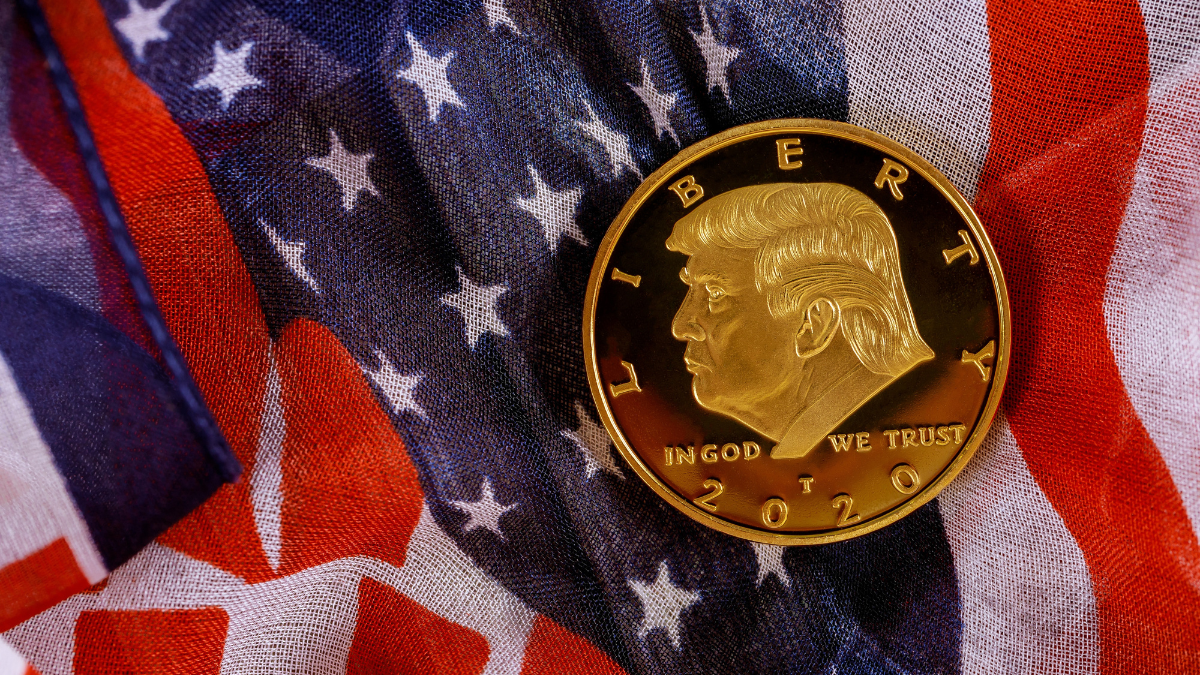
In 2021, Donald Trump called Bitcoin “a scam” and said cryptocurrency “seems like it’s competing against the dollar.” By the time he returned to the White House in January 2025, he had launched his own memecoin three days before his inauguration, signed an executive order to establish a national Bitcoin reserve, and overseen the construction of a family crypto empire that congressional investigators subsequently valued at up to $11.6 billion.1 The speed of this conversion is remarkable. Its causes are not difficult to find.
What follows is an attempt to map the Trump family’s financial exposure to cryptocurrency, to account for how that exposure shapes the administration’s economic policy, and to ask what it costs ordinary Americans when the interests of the presidency and the interests of the president run in the same direction.
The Empire
The family’s crypto holdings now span four distinct corporate vehicles.2 World Liberty Financial (WLF), a decentralised finance firm co-founded with his sons, has sold over $1 billion in tokens, with Trump personally netting $57 million in the first year; through an umbrella company, he and certain family members hold 60% of WLF’s holding company, entitling them to a cut of every transaction.3 Trump Media and Technology Group, previously best known for running the Truth Social platform, announced in May 2025 that it would raise $2.5 billion through stock and bond sales to create a Bitcoin treasury — effectively turning the president’s media company into a Bitcoin proxy, with the value of its balance sheet rising and falling with the price of the coin.4 American Bitcoin, a mining firm co-founded by Eric and Donald Trump Jr., went public on Nasdaq in September 2025 and now holds over 7,000 BTC as a treasury asset — at time of writing worth approximately $491 million.5 The fourth vehicle is the president’s memecoin, $TRUMP, which peaked at $75.35 the day before his inauguration and subsequently collapsed, losing over 92% of its value for those who bought near the top. Trump and Trump-controlled entities are structured to receive 80% of the coin’s total supply. At $5.50 a token across one billion tokens, that trove is valued at approximately $4.4 billion.6
The Trump family’s combined crypto holdings were valued at approximately $3 billion in early January 2026 by Fortune, before the subsequent market decline. Congressional investigators put peak holdings at up to $11.6 billion. By February 2026, American Bitcoin’s stock had fallen around 80% from its September high; the $TRUMP memecoin was down over 92% from its peak for retail buyers.
Historically, the Trumps made their money from real estate. That income is real and ongoing — Mar-a-Lago earned $50 million in 2024, and Trump’s total declared income that year was $630 million — but crypto has begun to eclipse it.7 One estimate suggests digital assets now account for the majority of his net worth, roughly $3.3 billion of a $5.5 billion total.8 The family has cashed out at least $1.2 billion from World Liberty Financial alone over 16 months, according to the Wall Street Journal.9
The Regulation
The crypto industry understood what it was buying when it donated $238 million to the 2024 election cycle, more than the oil, gas and pharmaceutical lobbies combined, and gave a further $18 million to Trump’s inauguration fund — money he was free to spend as he wished.10 The returns have been swift and specific. Trump nominated Paul Atkins, who has close ties to the crypto industry, to succeed Gary Gensler as chair of the Securities and Exchange Commission. The Department of Justice’s National Cryptocurrency Enforcement Team was dissolved. Investor protection rules adopted under Biden were repealed. In July 2025, Trump signed the GENIUS Act, a new regulatory framework for stablecoins — the same category of digital asset issued by World Liberty Financial.11
In November 2025, the House Judiciary Committee’s Democratic staff published a 200-page report, “Trump, Crypto, and a New Age of Corruption,” documenting the entanglement. Its findings included evidence that foreign nationals and state-linked entities had funnelled money into Trump family ventures to obtain policy favours; that at least one federal investigation into a crypto firm was dropped after a multi-million dollar payment was made to WLF; and that Trump had pardoned an investor in a company WLF had itself invested in.12 The White House’s response — that the president’s assets are held in a trust managed by his children and that there are therefore no conflicts of interest — has not satisfied independent ethics observers, given that the family’s enrichment continues in plain view.
“Donald Trump has turned the Oval Office into the world’s most corrupt crypto startup operation, minting staggering personal fortunes for him and his family in less than a year.”
Rep. Jamie Raskin, Ranking Member, House Judiciary Committee, November 2025
The Federal Reserve
To understand why the Trump family’s crypto exposure matters beyond ethics, it is necessary to understand the relationship between interest rates and speculative asset prices. When rates are low, capital flows into risk assets — stocks, real estate, and cryptocurrency among them. When rates are high, or when the expectation of cuts is removed, speculative assets deflate. Bitcoin fell from an all-time high of $109,000 in January 2025 to $78,000 by March, a decline that began the moment the Federal Reserve signalled fewer rate cuts than the market had hoped for.13 The family’s paper wealth moves with the price of Bitcoin. The president’s demand for lower interest rates is therefore not merely an economic preference; it is a financial interest.
Trump’s campaign against Jerome Powell, the Federal Reserve chairman, has been relentless. Over the course of 2025, he called Powell a “political hack,” publicly stated “I’d love to fire his ass,” and in December announced what he called “THE TRUMP RULE” on Truth Social: that the Fed chair should cut rates whenever markets are performing well, regardless of inflation conditions.14 In November 2025, federal prosecutors opened a criminal investigation into Powell over congressional testimony about the cost of the Federal Reserve’s $2.5 billion headquarters renovation — a probe authorised by Jeanine Pirro, Trump’s close ally and his appointee as US Attorney for the District of Columbia.15
Powell’s response, delivered in a video statement on 11 January 2026, was unambiguous: “The threat of criminal charges is a consequence of the Federal Reserve setting interest rates based on our best assessment of what will serve the public, rather than following the preferences of the President. This is about whether the Fed will be able to continue to set interest rates based on evidence and economic conditions — or whether instead monetary policy will be directed by political pressure or intimidation.”16
In March 2026, the judge overseeing the case quashed Pirro’s subpoenas, writing that “the government has offered no evidence whatsoever that Powell committed any crime other than displeasing the president.” Pirro announced she would appeal.17 Powell’s term as chair ends in May 2026; his successor will be appointed by Trump. The leading candidate, National Economic Council Director Kevin Hassett, has publicly agreed that rates should be cut further and faster.18
The Contradiction
The administration’s stated economic mission is to lower costs for ordinary Americans. The tariff programme, which has imposed the highest average effective rate since 1947, is framed as a mechanism to re-shore manufacturing and protect domestic workers.19 The Tax Foundation estimates that in 2025 the tariffs amounted to an average tax increase of $1,000 per US household; in 2026, the figure is projected at a further $600.20 These are real costs falling on real people, imposed in the name of their economic security.
The same tariffs, by raising import costs and sustaining inflationary pressure, have made it harder for the Federal Reserve to cut interest rates — which means higher mortgage costs, higher borrowing costs, and lower consumer spending power for the people the policy claims to protect. The administration simultaneously demands rate cuts and pursues a tariff policy that makes those cuts harder to justify. The Federal Reserve’s own projections suggest core inflation will remain above 2% well into 2027.21
There is a version of this contradiction that can be explained by genuine disagreement among economists. There is another version in which a president who holds billions in cryptocurrency — an asset class that benefits directly from loose monetary conditions — is pressing for interest rate cuts with unusual personal urgency, while deploying the criminal justice system against the official whose job it is to resist that pressure. The two versions are not mutually exclusive.
The boom that the Trump family bet on has not materialised. American Bitcoin’s stock has fallen around 80% since its Nasdaq debut. Trump Media’s Bitcoin treasury, built at around $103,000 per coin, is sitting on a significant unrealised loss. The $TRUMP memecoin is down over 92% from its peak for those who bought in good faith. The crypto industry’s enormous investment in Trump’s political success has not yet produced the sustained price surge that would validate it.
For ordinary holders — the retail investors who bought in on the back of a president’s endorsement — the losses are simply losses. For the Trump family, which extracted at least $1.2 billion in real cash from World Liberty Financial before the market turned, the structure of the ventures means that the downside is, to a significant extent, someone else’s problem.
- House Judiciary Committee Democrats, “Trump, Crypto, and a New Age of Corruption,” November 25, 2025. democrats-judiciary.house.gov
- Fortune / Ben Weiss, “Here are the 4 pillars of Trump’s growing crypto empire,” October 23, 2025. fortune.com
- Wikipedia, “Cryptocurrency in the second Trump presidency,” citing financial disclosure filings. wikipedia.org; NPR, “How does President Trump make his money?” June 26, 2025. npr.org
- DL News, “How Trump’s crypto empire fared in 2025,” January 5, 2026. dlnews.com
- CoinDesk, “Trump-backed American Bitcoin hits 7,000 BTC,” March 30, 2026. coindesk.com
- DL News, op. cit. Memecoin supply structure cited from trump.com token documentation.
- NPR, op. cit. Mar-a-Lago income and total declared income from Trump’s 2024 financial disclosure, released June 2025.
- AndSimple analysis of Forbes and Bloomberg net worth estimates, February 2026. andsimple.co
- Wall Street Journal, cited in Fortune, “The Trump family’s crypto portfolio is getting battered,” February 9, 2026. fortune.com
- Wikipedia, “Cryptocurrency in the second Trump presidency,” op. cit. Donation figures sourced to Federal Election Commission filings and OpenSecrets data.
- NPR, op. cit. GENIUS Act signed July 2025.
- House Judiciary Committee Democrats, op. cit.
- Fortune, “Bitcoin, broader crypto market slump as Trump unveils tariff package,” April 3, 2025. fortune.com
- Inman / Federal Reserve reporting, “Why the Federal Reserve Won’t Bend to ‘THE TRUMP RULE’,” December 24, 2025. inman.com; PBS NewsHour, Trump quotes compiled January 13, 2026. pbs.org
- Wikipedia, “Federal investigation into Jerome Powell.” wikipedia.org; CNN, “Federal prosecutors open criminal investigation into Fed Chair Jerome Powell,” January 11, 2026. cnn.com
- Federal Reserve, Statement from Chair Jerome H. Powell, January 11, 2026. federalreserve.gov
- Wikipedia, “Federal investigation into Jerome Powell,” op. cit. Judge James Boasberg ruling, March 2026.
- Axios, “Fed chair Powell faces Trump DOJ criminal investigation,” January 12, 2026. axios.com
- Tax Foundation, “Tariff Tracker: 2026 Trump Tariffs & Trade War by the Numbers.” taxfoundation.org
- Tax Foundation, op. cit. “$1,500 average tax increase per US household” figure covers full 2026 tariff regime as of April 2026.
- TheStreet Crypto, “IMF reveals rate cut forecast for 2026,” April 2026. thestreet.com


